
This comprehensive guide explores sea freight methods, including container shipping, bulk cargo, break bulk, and Ro-Ro transportation. Learn about FCL and LCL shipping, different types of cargo vessels, the shipping and customs clearance process, factors affecting freight rates, and essential maritime terms. Discover how to evaluate shipping options, compare freight quotes, and choose the right solution for your cargo.
If you are planning to ship goods for import or export, choosing a shipping method involves much more than comparing a single figure on a pro forma invoice. Cargo volume and weight, packaging type, cargo readiness date, the origin and destination ports, the need for special equipment, and port charges all affect the choice of the right shipping method. In some cases, the initial freight rate may be lower, but additional charges or longer consolidation and unloading times can make another option more suitable overall.
Sea freight is one of the main methods of moving goods in international trade. In this method, cargo is transported by ship between ports. Depending on the type
of goods, shipments can be carried in containers, as bulk cargo, as general cargo, or using specialized equipment. This range of options makes sea freight suitable for many commercial goods, raw materials, machinery, and large shipments.
Join Searino, a comprehensive sea freight platform, as we explore the main sea freight methods, the types of cargo vessels, the stages of shipping and customs clearance at ports, and common and specialized terms used in the shipping and maritime transport industry. The goal is to help you understand what information you need before booking and how to compare shipping offers fairly.
What Is Sea Freight and Why Is It Important in International Trade?
Sea freight is the transportation of commercial cargo across seas, oceans, and international waterways using cargo vessels. It is particularly important for moving large shipments over long distances because ships can carry different types of goods on a single voyage and connect to the global port network.
According to the United Nations Conference on Trade and Development (UNCTAD), around 80% of the volume of international trade in goods is transported by sea. This figure refers to the volume of goods, not the share of global trade by monetary value. The extensive port network and the ability to carry large shipments are among the main reasons sea freight plays such an important role in the global supply chain.
However, it is important to understand that sea freight is not always more cost-effective than other shipping methods. For small shipments and goods that need to reach their destination quickly, air freight may be a much better option. For heavy industrial raw materials, bulk cargo, equipment, and heavy machinery, however, sea freight costs can be significantly lower, making shipping by sea an economical choice.
Market Share
What Are the Main Methods of Sea Freight Shipping?
The right sea freight method depends on the volume of your cargo, how it is packaged, its dimensions and weight, whether it requires special conditions such as temperature control, and whether specialized cranes or other equipment are needed for loading or unloading. Therefore, you should identify the type of cargo carefully before booking. Each method has different requirements for loading, documentation, transit time, and additional charges.
What Are the Main Methods of Sea Freight Shipping?
The right shipping method depends on how your cargo is packaged, its dimensions and weight, and whether it requires special conditions such as temperature control or specific loading equipment. Identify the type of cargo before booking, as each method involves different loading procedures, documents, transit times, and additional costs.
Shipping method | Suitable cargo | Key point to check before booking |
|---|---|---|
FCL container shipping | Cargo for which a dedicated container is reserved | Check the total container cost, suitable size, and weight capacity |
LCL container shipping | Small shipments consolidated with other cargo in a shared container | Consider consolidation and deconsolidation charges and preparation time |
Dry bulk shipping | Grains, minerals, coal, and certain raw materials | Vessel type, loading capacity, cargo conditions, and unloading arrangements are important |
Liquid bulk shipping | Oil, liquid products, certain chemicals, or liquefied gas carried on specialized vessels | Check tank compatibility, safety requirements, and cargo permits |
General cargo or breakbulk | Cargo handled as individual units, such as pipes, steel coils, or machinery | Specify the lifting, securing, and cargo protection methods |
Heavy-lift and project cargo | Large industrial equipment, generators, turbines, and out-of-gauge cargo | Dimensional and weight drawings, securing points, and a loading plan are required |
Ro-Ro shipping | Cars, trucks, and wheeled machinery | Check whether the vehicle can be driven or loaded via a ramp, as well as any size restrictions |
Temperature-controlled shipping | Goods that require a specific temperature, often carried in reefer containers | Set temperature, power supply, and cold-chain continuity are important |
What Is FCL Container Shipping?
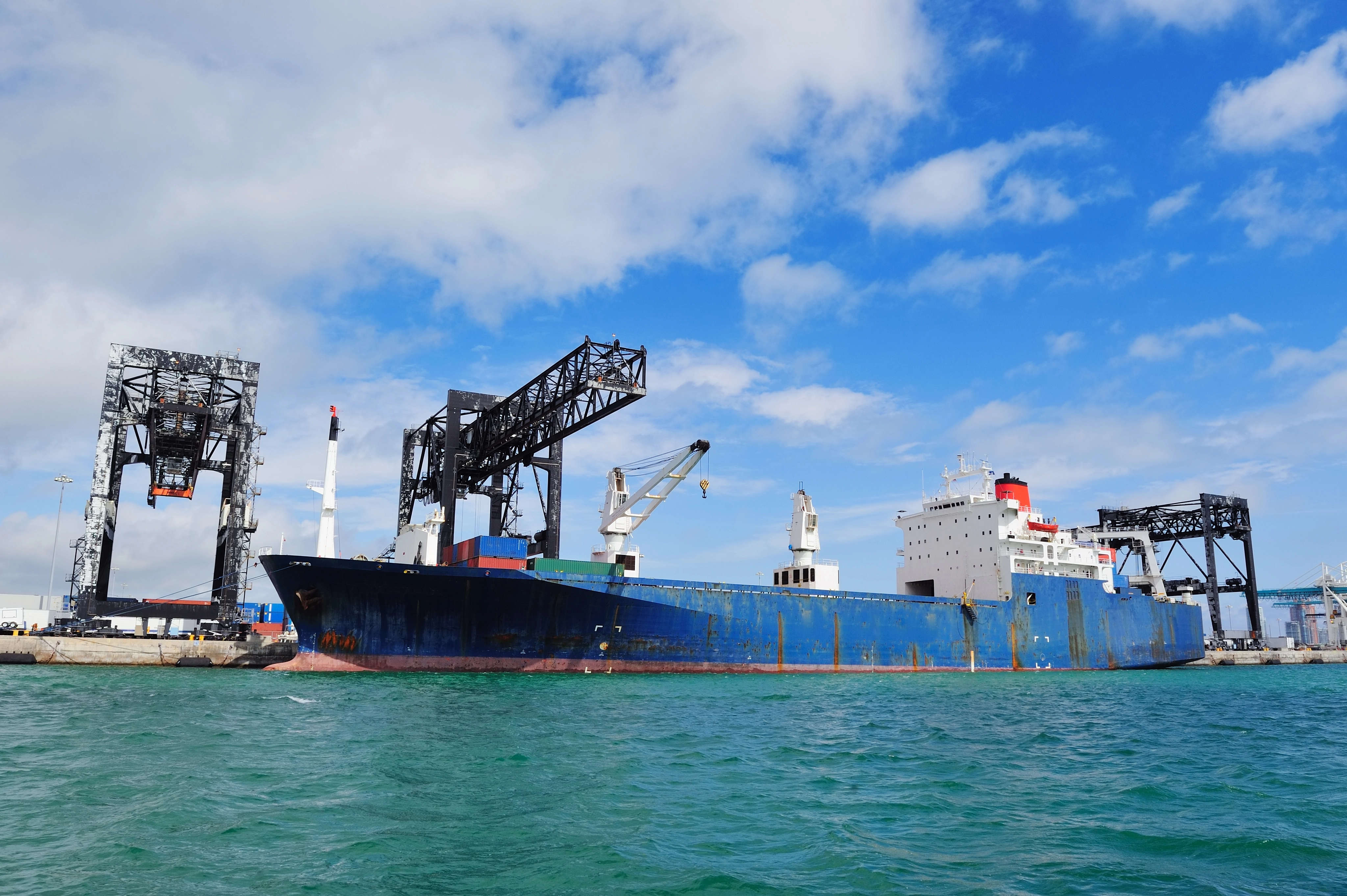
FCL stands for Full Container Load. It refers to a shipping arrangement in which an entire container is allocated to one cargo owner. The container does not have to be physically full. The key point is that its space is reserved exclusively for one shipper. The cost of this method is usually calculated based on the container rate, even if part of the container remains empty.
FCL is worth considering for large shipments or when you need greater control over how the cargo is loaded and the container is sealed. However, the container size must match the weight, dimensions, and nature of the cargo, and any route restrictions must also be taken into account.
It is worth noting that booking an FCL container may increase your sea freight costs. However, it can help you avoid time being lost at the origin and destination ports during container loading, unloading, and clearance. In other words, you may initially pay more to reserve a container, but avoiding delays can help prevent your capital from being tied up for longer than necessary.
What Is LCL Container Shipping?
LCL stands for Less than Container Load. In this method, a shipment that is not large enough to require a full container is consolidated with cargo from other shippers in a shared container. The cost is usually calculated according to volume or another pricing basis set by the service provider. This means the cargo owner does not have to pay for the entire container.
In addition to the freight charge, check the time needed for consolidation at the origin, deconsolidation at the destination, and local service charges. LCL may be a suitable option for small shipments, but when estimating delivery time, you should consider the entire process, not just the vessel's sailing time.
With LCL sea freight, the cargo owner may pay less to book container space, but may experience considerably more delays at the origin and destination ports and during port clearance. This can leave the cargo owner's capital tied up at the ports for a longer period and lead to financial losses.
The following table compares FCL and LCL sea freight:
FCL vs. LCL: Differences in Cost, Time, and Cargo Handling
Comparison criterion | FCL | LCL |
|---|---|---|
Booking arrangement | One container for one cargo owner | Container space shared by several cargo owners |
Common pricing basis | Dedicated container rate | Volume or the service provider's tariff basis |
Operational time | Usually no waiting for multiple shipments to be consolidated | May require time for consolidation and deconsolidation |
Cargo handling | A dedicated seal can be applied after loading | May involve more handling steps at the origin and destination |
Suitable for | Large shipments or cargo that requires a dedicated container | Small shipments for which booking a full container is not cost-effective |
Decision-making point | Compare the container cost with the space you need | Check total origin and destination costs and consolidation time |
There is no fixed volume threshold for choosing FCL or LCL across all routes. If your shipment is somewhere in between, request rates for both methods and compare the services and payable charges.
A Practical Example of Choosing Between FCL and LCL
Suppose a company has several pallets of spare parts to ship. At first glance, LCL may seem like the more logical choice because the company does not need to pay for an entire container. Before making a decision, however, it should also ask about origin consolidation costs, destination deconsolidation charges, terminal fees, and cargo preparation time.
Now suppose the shipment is larger and occupies a significant portion of a 20-foot container. In this case, it is better to compare FCL and LCL rates side by side. Consolidation and handling charges for LCL may make the price difference smaller than expected. Keep in mind that sea freight costs should be compared based on the total cost and delivery time, not only the base freight rate.
Dry and Liquid Bulk Sea Freight
Dry or liquid bulk sea freight refers to cargo that cannot be loaded into containers and is instead carried in bulk directly in the holds or tanks of specialized vessels. Dry bulk cargo includes unpackaged goods such as grains, iron ore, coal, and certain fertilizers. Liquid bulk cargo includes oil, liquid products, and some chemicals. Liquefied gas and sensitive materials require specialized vessels and tanks.
These methods should not be confused with container shipping. Vessel type, the method used to measure the cargo, port capacity, loading and unloading equipment, and safety requirements all play an important role in cost estimates and operational planning.
General Cargo, Heavy Cargo, and Project Shipments
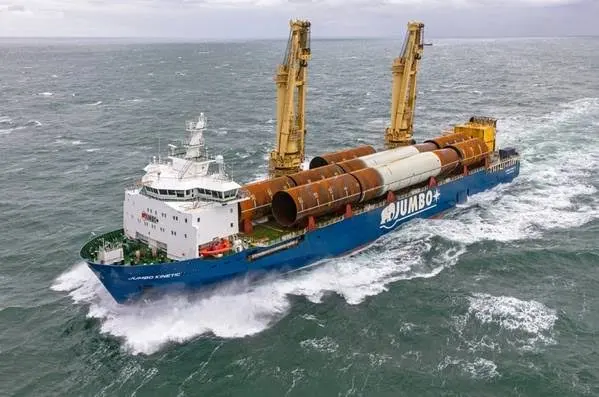
General cargo, or breakbulk, refers to goods transported as separate units rather than as loose bulk cargo or in standard containers. Steel coils, pipes, certain types of machinery, and large packaged shipments are examples of this category. Heavy and project cargo may require specialized equipment, lifting-point calculations, securing plans, and a loading plan. For these shipments, providing the total weight alone is not enough. The length, width, height, center of gravity, crane access points, and restrictions on the inland route to the port must also be specified.
Ro-Ro Sea Freight
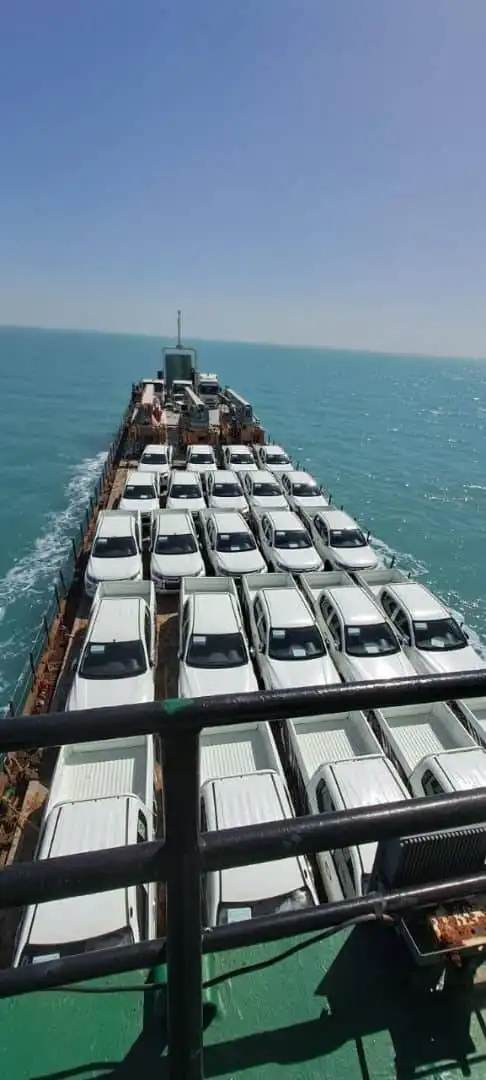
Ro-Ro vessels are designed for cars and wheeled equipment that can enter or leave the vessel via a ramp. This method can reduce the need to lift vehicles with cranes, but acceptance conditions, dimensions, weight, and the vehicle's ability to move must be checked. These vessels can load many vehicles at the same time, allowing them to be imported or exported without damage to the vehicles.
Types of Cargo Ships Used in Sea Freight
Commercial vessels are designed according to the type of cargo they carry and how it is handled. A wide range of ships is used in sea freight, and each vessel type has its own loading restrictions and cargo-handling capabilities. These factors can also affect sea freight costs. When requesting a sea freight rate, make sure you understand what equipment is required and which restrictions need to be checked.
Vessel type | Common cargo | Practical point to consider |
|---|---|---|
Container ship | Containers carrying commercial and industrial goods | Capacity is usually expressed in TEU; check the sailing schedule and whether transshipment is involved |
Dry bulk carrier | Grains, minerals, and bulk raw materials | Cargo capacity, loading method, and port unloading equipment are important |
Oil tanker and tank vessel | Oil and liquid products; some types carry chemicals or gas | Tank type, cargo compatibility, and safety requirements must be confirmed |
Multipurpose or general cargo vessel | Machinery, steel, and non-containerized cargo | Review the cargo loading and securing plan before booking |
Ro-Ro vessel | Cars and wheeled machinery | Dimensions and ramp entry and exit conditions are important |
Refrigerated vessel or service | Temperature-sensitive goods | Temperature requirements and storage equipment must match the cargo |
The vessel type alone does not determine the shipping rate. The route, available capacity, ports that can be used, contract type, cargo readiness date, and additional services must also be included in the rate inquiry.
The Sea Freight Process from Origin to Destination
The sea freight process usually starts with collecting shipment details and requesting a rate, and continues until the cargo is delivered at its destination. The details may vary depending on the type of cargo, route, shipping method, and contract terms. For this reason, it is best to clarify each stage before booking.
Preparing Shipment Details and Requesting a Freight Quote
Requesting a sea freight quote requires complete cargo information, including the type of goods, gross weight, volume and packaged dimensions, number of packages, origin and destination ports, and the date when the cargo will be ready. You can enter this information clearly and in full on the Searino sea freight platform. If the cargo is dangerous, fragile, perishable, or requires temperature control, make sure to specify this in the relevant forms and upload the required documents.
When requesting a sea freight quote, also specify which part of the journey the rate covers: port-to-port, warehouse-to-port, or a service that also includes final delivery. If the scope of services is not the same, comparing two rates can be misleading and may result in additional costs.
Choosing a Shipping Method and Booking Sea Freight
After receiving rates from shipping companies in your personal dashboard, review which offer best matches your requirements in terms of total cost, sailing schedule, transit plan, equipment conditions, and origin and destination services. For containerized cargo, decide between FCL and LCL and choose the appropriate container size. For bulk or project cargo, also confirm the vessel specifications and loading equipment.
Before booking, check how long the rate remains valid, the container's free time, charges excluded from the main rate, and the conditions for cancelling or changing the booking. A rate without a complete description of the included services is not sufficient for making a final decision.
Cargo Preparation, Packing, and Loading
Packaging should be suitable for the cargo's weight, fragility, shape, and storage conditions. For containerized shipments, cargo stowage and securing are important to prevent the goods from shifting during handling or the voyage. Depending on the cargo, documents such as a packing list, cargo specifications, Verified Gross Mass (VGM) information, or other specialized documents may be required.
For general cargo and heavy shipments, the lifting method and securing points must be specified before the cargo arrives at the port. Incomplete packaging or missing weight and dimension details can interrupt operations and create additional costs.
Export Formalities and Loading onto the Vessel
Before cargo leaves the origin country, export documents and formalities must be completed according to the country of origin and the type of goods. Documents may include a commercial invoice, packing list, customs declaration, and information required for the transport document. Special cargo may require additional permits or documents.
Once the cargo has been accepted and the relevant procedures have been completed, it is loaded onto the vessel. The final transport document details should match the cargo information, shipper, origin, and destination so that discrepancies in the documents do not cause delays at destination.
Sea Transit and Shipment Tracking
During the voyage, the vessel's schedule, calls at intermediate ports, and estimated arrival time may change. If the shipment involves transshipment, identify the port where the transfer will take place and check whether this step affects the total transit time.
A booking number, container number, or bill of lading number is generally used for tracking. The information available depends on the carrier and its tracking system. An estimated arrival time is not a guaranteed delivery time at the consignee's warehouse because port procedures, customs clearance, and inland transportation also take time.
Unloading, Customs Clearance, and Final Delivery
After the vessel arrives, the cargo is discharged at the destination port, and import formalities and delivery procedures continue according to the contract and the regulations of the destination country. The documents required to release the cargo depend on the transport document, shipping line, and destination procedures. Therefore, you should not assume that a paper original bill of lading is the only acceptable option in every case.
For containerized shipments, keep track of free time, terminal charges, and the deadline for returning the empty container. If customs clearance, inland transportation, or cargo unloading is delayed, charges such as storage, demurrage, or detention may arise.
How Are Sea Freight Costs Calculated?
Sea freight is not a fixed amount for all goods and routes. To estimate the rate more accurately, you need to specify what is being shipped, its weight and volume, the ports of origin and destination, and the type of service required. Available vessel capacity, booking time, intermediate routes, and market conditions can also affect the rate. UNCTAD's annual Review of Maritime Transport also discusses rate fluctuations and the impact of changes to maritime routes on shipping costs.
Factors That Affect Sea Freight Rates
Rate factor | Why it matters | What information to provide |
|---|---|---|
Origin and destination | Distance, available ports, and route services vary | Names of the loading and discharge ports; inland origin and destination addresses if required |
Cargo type and characteristics | Dangerous, refrigerated, or sensitive cargo may have special requirements | Exact cargo name, packaging condition, and storage requirements |
Weight, volume, and dimensions | These affect container selection, equipment, and the pricing basis | Gross weight, volume, and dimensions of each package |
Shipping method | FCL, LCL, bulk, Ro-Ro, and project cargo involve different service structures | Preferred method or permission to compare several options |
Route and transshipment | Transfers between vessels or intermediate stops may affect time and cost | Preference for a direct route or acceptance of transshipment |
Origin and destination charges | The base freight rate does not always include all port and local services | Request a breakdown of base freight and additional charges |
Booking time and capacity | Available capacity and market conditions can change | Cargo readiness date and flexibility in timing |
Additional services | Inland transport, insurance, customs, and documentation may be charged separately | Exact scope of services required |
How to Compare Sea Freight Rates Correctly
After you submit your cargo details on the Searino sea freight platform, shipping companies can offer rates for your shipment. If two companies quote different prices, do not look only at the final figure before making a decision. Check which services are included in each offer, how origin and destination charges are calculated, how long the rate is valid, the estimated transit time, and how much free time is offered for the container.
Also ask whether the price includes THC, document issuance, port services, inland transportation, customs clearance, and insurance, or whether these items are charged separately. For an initial inquiry, you can start from Searino's sea freight services page and provide as much shipment information as possible.
Common Terms Used in Sea Freight
The sea freight industry uses a number of terms that are useful to understand when reviewing and signing contracts with shipping companies. The following table explains some of the most common terms:
Term | Practical meaning | What to check |
|---|---|---|
Bill of Lading (B/L) | A receipt for the goods and a document related to the contract of carriage; some types also function as documents of title | The type of bill of lading and the cargo release procedure at destination |
Charter Party | An agreement to hire a vessel or part of its capacity for a specific voyage or period, under agreed terms | The parties' responsibilities, allowed operation time, charges, and conditions for delays |
THC | Terminal Handling Charge for container handling services at the port terminal | Confirm whether it is charged separately at origin and destination or included in the rate |
Free Time | The period during which demurrage or detention charges do not apply under the stated conditions | Check the number of days and when the period starts and ends |
Demurrage | In container shipping, usually a charge for keeping a container at the terminal beyond free time; in charter party contracts, it is also related to delays in loading or discharging operations | The contractual definition, allowed time, and tariff for the relevant route |
Detention | Usually a charge for keeping a container outside the terminal beyond the allowed period before returning it | The container return location and deadline, and how the days are counted |
TEU | Twenty-foot Equivalent Unit, used to express container capacity | TEU is a capacity unit, not a cargo weight unit |
CBM | Cubic meter, a unit for measuring cargo volume | Use the final packed dimensions as the basis for calculation |
POL / POD | Port of Loading / Port of Discharge | Enter the exact port name consistently in the inquiry and shipping documents |
Advantages and Limitations of Shipping by Sea
Sea freight offers important advantages for large shipments and international routes, but delivery time, port access, vessel schedules, and additional charges should be checked before choosing this method. In addition to benefits such as low freight rates and a high level of cargo security, sea freight can also lead to significant financial losses if the wrong shipping option is selected.
Shipping by sea is not suitable for every type of cargo. When booking, you should check whether the expected arrival time, port charges, and other additional costs still allow your shipment to remain profitable. Our article on the advantages and disadvantages of shipping by sea explores these risks in more detail. The table below provides a brief summary.
Advantages | Limitations and risks |
|---|---|
Ability to move large volumes of goods in a single voyage | Transit time is usually longer than air freight |
A range of options for containers, bulk cargo, general cargo, and project shipments | Cargo must be compatible with the vessel type, equipment, and port restrictions |
Cost-competitive for bulky cargo on many long-distance routes | Local charges, port fees, storage, or delay charges may be added to the base rate |
A network of ports connects different markets | Route changes, port congestion, weather, and vessel schedules can affect delivery time |
With proper packaging and sealing, container shipping can limit cargo handling and direct access to the goods | Poor packaging, inadequate securing, or additional handling can still cause damage |
Heavy and oversized cargo can be transported using ships and specialized equipment | Project cargo requires engineering planning, permits, and specialized equipment |
Regional Sea Routes and the Role of Feeder Vessels
Not all sea freight shipments travel from the port of origin to the destination on a single vessel without stopping. On some routes, cargo is discharged or transferred at a hub port and then carried to its destination by another vessel. This transfer between services or vessels is called transshipment. It can be part of the shipping network, but it must be taken into account when estimating time and cost.
Feeder vessels are generally used to move containers between regional ports and hub ports. When reviewing a route, do not use the distance between the two ports as the only criterion. The number of stops, connection time between vessels, available capacity, port charges, and vessel departure schedule are also important.
For example, when requesting rates for routes such as sea freight from China to Iran or sea freight to Dubai and Oman, specify the exact port, service type, and whether transshipment is possible. These are examples of route-related search terms used by customers; they do not mean that a service is always available on every date. The route schedule and conditions must be checked at the time of the inquiry.
How Can Searino Help You Explore Sea Freight Services?
Searino provides a platform for exploring sea freight services and submitting rate inquiries. To get started, prepare your cargo details, intended route, and required services so that your request can be reviewed with clear and complete information. After you submit a cargo request, it is displayed to shipping companies, which can send price offers directly to cargo owners.
The Searino sea freight platform aims to increase transparency in maritime transport and prevent profiteering by removing intermediaries from the shipping industry. On the platform, shipowners and cargo owners can connect and arrange sea freight more easily.
Frequently Asked Questions About Sea Freight
The following are some frequently asked questions about the advantages and disadvantages of sea freight.
What Is Sea Freight?
Sea freight is a method of transporting goods between ports using commercial vessels. Depending on the type of cargo, goods can be shipped in containers, as dry or liquid bulk, as general cargo, by Ro-Ro vessels, or as heavy and project cargo.
What Types of Goods Are Suitable for Sea Freight?
Sea freight can be used for a wide range of goods, from packaged products and raw materials to machinery and large shipments. The choice of method depends on the nature, weight, volume, dimensions, storage requirements, and required delivery time of the cargo.
What Is the Difference Between FCL and LCL Shipping?
With FCL, a container is allocated to one cargo owner. With LCL, a shipment is transported in a shared container with cargo from other owners. FCL is usually priced at a container rate, while LCL is generally priced by volume or according to the service provider's tariff basis.
How Are Sea Freight Costs Determined?
Rates are determined by the origin and destination, cargo type and specifications, weight and volume, shipping method, available capacity, route conditions, and scope of services. Port charges, documentation, customs clearance, insurance, and inland transportation may also be charged separately from the base freight rate.
How Long Does Sea Freight Take?
Transit time depends on the route, vessel schedule, number of stops, transshipment, port conditions, and origin and destination procedures. For planning purposes, consider the total time from cargo readiness to final delivery, not only the vessel's sailing time.
What Is the Difference Between Demurrage and Detention?
In container services, demurrage usually refers to keeping a container at the terminal after free time has ended. Detention usually applies when a container is kept outside the terminal beyond the allowed period before being returned. The exact definitions and how the days are counted should be checked in the terms and conditions of the relevant shipping company and port.
What Information Is Needed to Get a Sea Freight Quote?
The main details required are the cargo type, number of packages, gross weight, dimensions and volume, origin and destination ports, cargo readiness date, and required services. Special conditions such as temperature control, dangerous goods, or non-standard dimensions must also be declared.
Is Sea Freight Always Cheaper Than Other Shipping Methods?
No. Sea freight can be cost-effective for many large shipments and long-distance routes, but the total cost, delivery time, additional charges, and special cargo requirements should be compared with alternative shipping methods.
Conclusion: How to Choose the Right Sea Freight Method
To choose the right sea freight method, first identify the cargo type, weight, volume, dimensions, and required delivery time. Then select a suitable method based on the cargo's characteristics and compare rates with the same scope of services. Considering transit time, port charges, documentation, free time, and potential container delay charges will help you make a more informed decision.
Before making a final booking, make sure you understand which services are included in the quoted rate and which charges will be calculated separately. To explore shipping options and submit a rate inquiry, you can use Searino's sea freight services at Searino.com.


